Quote:
. . . So I don't treat people differently based on their expertise and my users appreciate such treatment. . . . But what difference would it make in your world, Sean, if you helped me with your knowledge so that I could recover data for a user? You asked if I was a professional - but if someone isn't a professional, but isn't a newbie and is somewhere in between, that the idea is to help those people gain knowledge and skills so that they can better help their users? Why does it make a difference what level someone is at? Isn't it good enough that we will have made someone happy and grateful because we were able to get their data back?
J
I realize that your fair question was directed at Sean, not me. Nonetheless, I'd like to take a stab at it.
It's not simply that DR folks think that they have the recipe for turning lead into gold and don't want to share it (although there is a good bit of that). Nor is it that they have pathological feelings of superiority.
If someone is a "pro" (which we cannot verify from a newsgroup) then there is the expectation that they have proper tools, a clean environment for performing mechanical work, and plenty of experience (including making mistakes, which is a rather essential part of the process). So if a "pro" shares info with another "pro" there is a good chance that what was left unsaid is understood by both parties. And that the "pro" will have a fair chance of succeeding.
You may be very adept at registry repairs, virus eradication, etc. but none of that is helpful when you are doing a head swap.
The bottom line is, my friend, that without the proper tools, knowledge, and plenty of experience, the chances of you recovering data on this one drive are very slim to none. It's really nothing personal. Not at all.
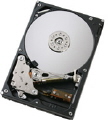
For starters, how are you certain that the Travelstar has bad heads? If it is a HTS541xxxxJ9SA00 series, for example, the vast majority can be recovered without head replacement. If the drive had a firmware problem, could you repair the modules? If it had a bad PCB (unusual with this series) would you know what needed to be done?
How would you plan to remove the head stack? How would you plan to load it back? How will you deal with the 'floating" bottom magnet? What will you do if you see media damage? After you have reassembled the drive, how will you tell if you have succeeded? What if one head or platter is bad, how will you get the remaining data?
These are not trivial questions, but, for the most part, need to be addressed each time you contemplate a head swap. Not to mention the heads compatibility question, which does not always have a simple, irrefutable answer.
Hope that helps you to understand our collective "attitude." it's not that we don't want to be helpful. It's not that we don't want you to succeed. It's just that we want to be sure that your professors with grant affinities will get back their work so that at the end of the day, your wages will be paid too . . .
Jono



 FAQ
FAQ Search
 Login
Login Register
 HDDGURU FILES