Steve, that is a great point. I had sent the guy asking the question an email directly with the info he asked for. However I will post the information here. In addition to this on the SANS page here there is 5 pages written up on what the seated class entails. The links are on the right of this page:
http://www.sans.org/info/37599The seated class evolves and continues to add new material and tools each class. The Distance Learning class is a class in a box, the only difference being in that in the distance learning there is a hard drive with all of the days video taped as well as videos of the labs. A $1000 of tools are included in the package so that you can do your own platter swaps, rebuilds, head stack swaps, etc. The primary tool being the platter replacement kit (HPE) from Salvation Data.
This is the basic details from the class covering a very broad set of topics.
Data Recovery Forensics
We perform labs repairing damaged drives, recovering corrupted information from operating systems, and using affordable Windows software tools so you can perform jobs successfully yourself when you leave this class. You will recover information in the lab from RAID 0/5 arrays, NTFS, Mac OSX, and Linux file systems EXT 2/3 and Reiser. Everything will be provided for you in this class including laptops. Every forensics or data recovery specialist needs to know the information that is taught in this class!
Day One
On day one we will introduce you to the basic hardware equipment used by data recovery professionals. We will discuss each tool the purpose as well as pros and cons of each tool. This will begin to give you the vocabulary and basic knowledge, the groundwork needed to be able to continue discussions of what is possible in the lecture over the next few days. Some of the tools we will be looking at will be head combs, the PC3000, the Deepspar Forensic Disk Imager, the Salvation Data's Data Compass, the HPE Platter Extractor tools as well as a few others like the PSI Cyclone and Hammers.
We will break down the four main phases of data recovery. We will then discuss the Myths surrounding hard drives and dispel some of the existing beliefs so that we can start to understand the truth verse marketing or false information.
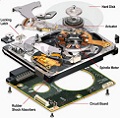
We will then start with the anatomy of the drive and begin to break down what each item is, what it is called, and what its function is. A hard drive has an extremely large amount of planning involved with each part and function in it. There is nothing in a hard drive that is extra and that does not have a purpose. We will review each of the physical attributes and how they affect your ability to recover the data from the drive. Items discussed will include the Actuator Assembly, the Voice Coil, the locking pins, the Pre-Amp, The circuit boards, the motor and spindle, as well as the platters themselves that contain your data. We will even discuss the landing zone and the purpose and locations of the parking locations and why they were chosen.
We will review the goals of the labs and display examples of what you will be performing during the lab and what order it will be executed in. There will also be a process for building your own head replacement tools from foil and foam that is better than most head combs that exist.
During the labs you will mount hard drives using USB connectors, format the drive and put data on the drive that you will attempt to recover after you completely break the hard drive down to bare metal. You are going to very carefully disassemble two hard drives during the lab and extract all the parts including the head stack assembly, the printed circuit board, the IC circuit board, and finally the platters themselves. You will then reassemble each piece and attempt to get the drive working again. You will most likely not be successful on the first attempt so over the next two days we will do a total of five drives. At this point you will start to get a better grasp on the puzzle pieces like the locking pin assembly and the spacer for the heads.
While this lab is progressing, I will be walking around helping and mentoring people doing this function. Many times I will give advice to all students and may call people over to look at a particular hard drive, as each drive is different. You will get an assortment of drives so you will get the advantage of seeing variety and the different way each drive is manufactured. This will increase your skills at recognizing processes and parts you learns this process.
After you have experience with the internals of the drive and now have a better grasp of the basics, I will show you a few videos and pictures of drives I have disassembled and repaired and recovered data from.
We will close the day with a display of how to match hard drives for donor drives. This is where you will learn what you need to acquire your parts to rebuild your damaged hard drives.
Day Two
Now that you have a basic understanding of the physical attributes of the drive, we will move to the more logical functions controlled by the drive and the internals of initialization processes done by the drive at the power on cycle.
As we move into the heads and cover those functions, we can discuss the content in each of those items read by the heads. Primarily this is addressed by the contents of the System Area then referred to as the SA area. This will lead us into the UBA blocks, P-Lists, G-Lists, ECC, Zone Tables, and Password tables. As we cross over into the platters we will start with a breakdown of the cylinder structure vs. zone tables. The servo arcs and geographical information surrounding the platters will be affected since we have switched to voice coils over stepping motors.
Now that we know how the data arrives at the heads as it passes though the preamp, we will look at the content that is encoded and built around randomization patterns to be written to the platters as a sector. We cover the content encoded in that sector and each location and what it looks like. This is the introduction to error codes that you will get tied back to the data recovery hardware and software covered in lecture on the first day. We will have in depth information about the servo data, the addresses on the drive and locations in respect to the head, sector, and cylinder boundaries.
As we discuss this content and introduce each type of error, I will break the errors down logically so they can be understood based on the data recovery equipment and software used. This will include the error codes and status flags.
Now that you have an even better understanding of the sensitivity of the hard drive and how everything affects the heads, platters and alignment and how even a small amount of change can affect the drive, you will be given three more rives today. We will do the same functions we did on day one being much more careful. We will format the drives, copy files to the drive for us to recover, then break the drives down to bare metal. Following that we will reassemble and attempt to recover the data we wrote earlier.
Day Three
Beginning on Day three we will put away all the physical rebuilds components and begin to focus on the imaging and logical corruption and repair. We now have the skills to physically repair drives and get it working again, now we need to deal with the content and acquire the data and repair any corruption that might have occurred. We begin the day looking at standard ways of imaging content.
We will also have carefully crafted USB Memory Sticks that contain NTFS file systems (usually on fat us used on small drives) and are corrupted exactly like you will see on drives in your lab. We then begin by using tools like FTK Imager, DriveImage XML and Medial Tools Pro all of which have special advantages and disadvantages. After you have a clear understanding of the way software imaging looks, I will demonstrate a high-end data recovery tool like the Deepspar Forensics Disk Imager and show you the capabilities and what all the functions do. I will educate you on how to do a repair on sectors and copy a damaged drive using this tool on a sample damaged hard drive. This will be followed by an example of Salvation Data’s Data Compass and the functions it supplies on the fly and the protection it offers for damaged hard drives.
We will close out the second phase of data recovery, drive imaging, and move into the third phase, which involves file systems and corruption after the image is made. Again we will use a carefully crafted USB memory stick, which will not properly mount NTFS and we will step though how you can recover or repair and see the content in the MFT using tools and find the location of the files you wish to recover. The major part of this will include discussions of file systems and labs which I will explain the advantages and disadvantages of each tools and show you all the items that are special about the tools.
We will have several labs that you will do that demonstrate how you can see and recover data from corrupt drives. That includes reviewing partition structures including the GUID Partition Structure, recovering from NTFS when it won’t mount. The labs will include the use of Disk Explorer for NTFS and its special qualities that make it a superb data recovery tool when used in parallel with GetDataBack for NTFS. We will also review a NTFS drive using Testdisk.
Day Four
On day four we will spend the first half of the day finishing up logical structures of the top three operating systems followed by lecture and lab on assembling RAID 0 and RAID 5 arrays. We start the day finishing up Windows and NTFS with the unusual differences between Vista and XP with regards to data recovery. This included options like Shadow Copy file recovery, changes to the structure of files in the recycle bin as well as info2 files.
Mac OSX HFS+ partitions when Mac OS X can’t repair or recover from them. During these sections we will use reference material and discuss the nature of each operating system touching on its basic format and file structure. Labs during this day will include HFSExplorer where we can see the B* Tree structure stored in the Mac OSX Catalog. We will then move on to examining the basic functions and software available to recover Linux EXT 2/3 and Reiser partitions. There are additional tools used to recover and rebuild Linux that will include tools like R-Studios, Disk Explorer for Linux.
In the afternoon we will begin with an examination of the HPA’s (host protected area) effect on JBOD, how to review custom arrays created by different manufactures and then crossover into RAID 0/5 arrays. We are only addressing the functions necessary to recreate the RAID arrays to be able to retrieve data from them, not to rebuild them to be able to put the array back in place. We are only interested in the ability to acquire data from the drives and be able to deliver that content back to whomever needs it.
The labs for RAID 0 and RAID 5 will include several premade images, which we will process. Rebuilding these arrays can be done several ways and will require a lot of time. I will show you what happens when you have the settings for RAID wrong, quick and easy ways to identify the problems and how to find the correct settings by doing entropy by sight or sound and correcting the issues so you can do a successful recovery. I will also demonstrate how you can do some of these functions faster using other tools like X-Ways Forensics and R-Studios and Raid Reconstructor.
Day Five
On day five we view information about Solid State Drives. We focus on what happens over time to data on a solid state drives, and how the solid state drives functions. We will cover the lower level functions that are different than a physical hard drive and why that is important to data recovery and forensics. I will display some screen shots of some research I have done capturing dd images of solid state drives at different times and what has happened to the data. You will be amazed to find out the effect on unallocated and file slack space and defragmentation. This will lead us to discussions about the impact solid state will have on the future of forensics and data recovery and possible issues we may have getting recovered content admitted into court. This will also include a discussion about a newer FAT file system, FAT64 and the purpose that it was developed to solve.
I will have some new information about the future of storage and changes to hard drives, as well as flash media and introductory information about new technology called Domain Walls or RaceTrack Memory under development by the same designer of the current head technology on the hard drive. The lifespan of current media and shelf life of flash media as a long term storage will be reviewed and we will discuss alternative methods of keeping data safe or how to do refresh the content so that it will remain intact if you have to store forensic data for years to come.
In addition, during a recovery, there are some issues with security on drives that does not involve encryption such as GUID/SID folder protection. These items will keep you from knowing the data is on the drive and since it is “invisible” during the data recovery phase it is possible you might miss extracting important content. We will discuss ways to get around this “file protection” in the different operating systems.
As we wind down to close the fifth day we will cover a few of the unique items that are functions of the drive that might affect your ability to get an image such as TPM, hard drive passwords, flash updates to the drive, translator tables, and secure erase wiping tools built into the motherboard and drive for high speed wiping. How the HPA can be used for many other functions such as Lo-Jack for laptops, or resizing a drive to limit software recovery.
Scott A. Moulton
SANS Instructor for SEC606
Forensic Data Recovery
http://www.sans.org/info/37599


 FAQ
FAQ Search
 Login
Login Register
 HDDGURU FILES



 !!
!!