First off I would like to apologize if this topic has been beaten to death but I have searched and searched for all the info I am looking for in numerous forums and found only fragments of what I am looking for at best. I know forum guru's get very frustrated when questions have been repeated.
I have a Barracuda 500GB (4 heads/2 platters) ES.2 that died in what appears to be multiple areas. It is a data only drive (1 of 3 drives on this PC) and I discovered that it was bad when my operating system would not boot up. Looking in the BIOS 2 of my 3 drives were not showing up (they were all the same batch ES.2 drives). One of the drives not showing up being the OS drive, the other being this data drive. After process of elimination I discovered it was this drive that was bringing down my entire PS. After doing some research I found that it could be the 12V TVS Diode that had shorted. I clipped this off, and although my OS drive would now boot with this data drive attached, the data drive still could not been seen in BIOS. At this time I replaced the PCB from another identical drive. Luckily (or not) I have 6 of these drives total, purchased at the same time from the same batch. From what I understand the ROM would need to be swapped out in order for the drive to function properly. More on that later. Even with the replaced PCB, still nothing in the BIOS. I then went on to replace the heads after reading so much about the failures of these particular drives. I know this is very controversial and I have heard many people say the drive is ruined the minute you open up the case. Please assume I am in a clean room. Upon replacement of the heads, with the new PCB, BIOS can now at least see there is something there, but I get the code ST_M13FQBL. The drive spins up, give a series of about 11 evenly spaces clicks and then powers down. If I put the old PCB on the drive with the new heads, the drive give several bursts of about 4 clicks and shuts down.
My questions are as follows:
1: assuming that the heads never touch each other, is it possible to replace the heads without the tools that disengage the heads from the platter without having to slide the heads to the end of the platter. I have seen some expensive tools (only overseas though) that will separate the heads in the park position. Very slick, but I cannot find them anywhere in the states. I have seem some instructors on YouTube slide the heads to the edge (while contacting the platters the whole time) and then separate the heads with varying home made tools for removal. This is what I have done, and although I have been very careful and it seems to go well, I am not sure if this is what my problem is. I have even seen an instructor spin the platter when the new heads are installed to get them to go into the park position. I did this on one attempt and the platters became very resistive as if there was something binding. Did not feel right to me. Any advice?
2. I have seen a head replacement tool from salvationdata.com that may be a decent (and inexpensive) option for head replacement but they don't seem to specify ES.2 (not sure if 7200.11 4 head 2 platter is the same). Would this work, and does any body know if they are a solid company to order from? I had found another one that looked very professional, again overseas, but they wanted around $700 for it and it's very drive specific. As soon as I hopefully get the data off of this drive that's it for the ES.2's for me.
3. Attached is a pic of the ES.2 board (the other pix of 7200.11 and .12 don't look exactly the same) with the numbers 1, 2 and 3 on them. Could someone please tell me which one is the 8-pin ROM that needs to be swapped when replacing the PCB?
4. What should I expect to see/hear if everything was functioning properly, and all that was needed was to swap out the ROM from the old PCB? I'm curious if that may be the only thing giving me the ST_M13FQBL code in the BIOS of if that is a definite sign that I still have head problems?
Finally, I am diligent about backing up and have 99% of my data backed up but I seem to have left out a newly added folder in my backup schedule that I would like to get back. With that said, it is not worth $2k for me to recover, but I would really like the lost data (would save me time recreating), and am willing to spend additional time and some $ on the cause if it is even slightly possible for me to recover the data and learn something along the way. It seems as though I have already spent too much time trying to sift through everyone else's Q&A and decide to cut to the chase and see if anyone could share some of their expertise in this area. Although I am new to the HDD hardware troubleshooting/repair, I am an electrical engineer as well as a fabricator and do have some knowledge and skill-sets when it comes to electronics and mechanics.
Your knowledge on the subject is my appreciated!
"You don't know what you don't know"
Attachment:
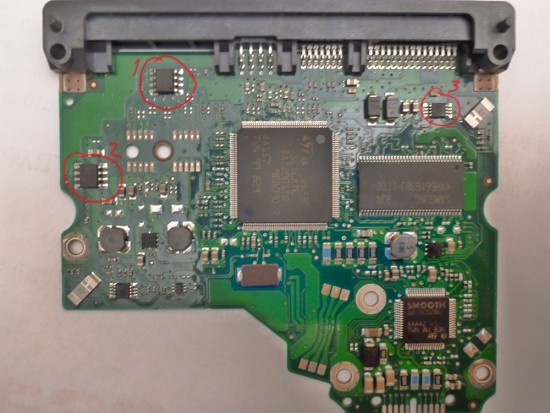 P1040957 copy.jpg [ 546.6 KiB | Viewed 9206 times ]



 FAQ
FAQ Search
 Login
Login Register
 HDDGURU FILES



 As stated previously, I am diligant about backups but missed something that I would like to have, but I can recreate. It will just take time. Perhaps I should be spending my time doing that instead of attempting to find HELPFUL information from these forums. If it was critical and irreplacable data, I would have taken a much different path but I know going to the pros for data recovery isn't cheap and paying even $500 isn't worth it. I have other projects that already consume plenty of cash.